
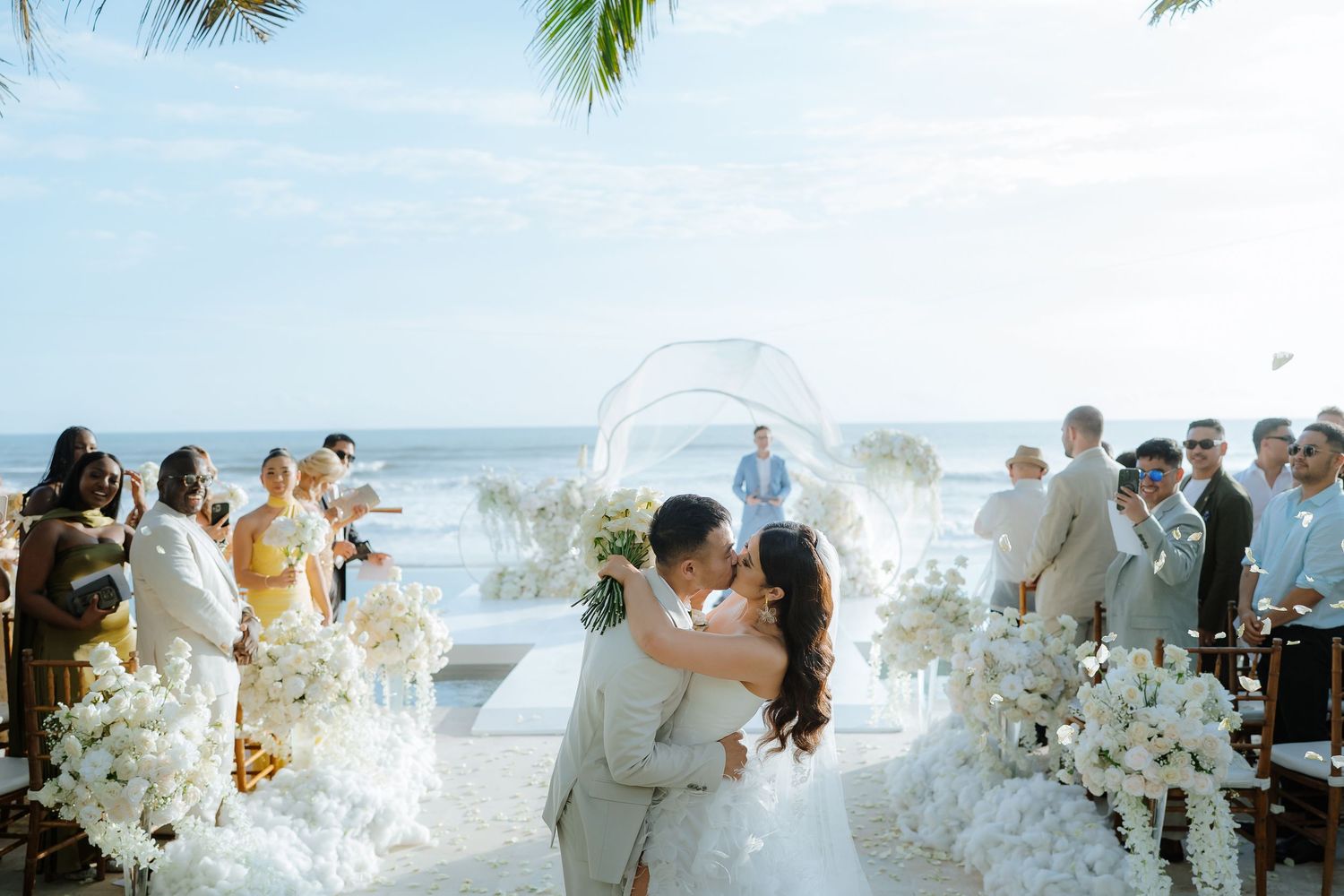
Planning a wedding doesn't have to mean organizing a large celebration with hundreds of guests. Bali elopement photography documents a smaller, more personal wedding experience, whether you exchange vows on a quiet beach, celebrate in a private villa, or share a ceremony overlooking Bali's dramatic cliffs.
For many international couples, an elopement offers a simpler way to celebrate their relationship while enjoying a destination they love. With fewer guests and a more flexible schedule, you can focus on meaningful moments, beautiful scenery, and photos that tell your day's story.
But how do you plan an elopement in Bali from start to finish? You need to understand the difference between legal and symbolic ceremonies, decide how many guests to invite, choose the right location, and arrange photography around the most important moments.
This guide explains each step, including ceremony ideas, photography considerations, and a practical half-day itinerary to help you plan an intimate celebration without unnecessary stress.
What Is a Bali Elopement?
An elopement is a small, intimate wedding that prioritizes the couple and their commitment over a large, traditional celebration.
Unlike a conventional destination wedding with an extensive guest list and a full reception, an elopement can be as simple as exchanging vows with a celebrant and photographer, then taking portraits and enjoying a private dinner.
Bali offers several settings for this type of celebration, including beachfront locations, tropical gardens, private villas, clifftop venues, and peaceful countryside retreats.
Bali is also an established international travel destination. According to BPS-Statistics Indonesia, the island recorded approximately 6.33 million direct foreign visitor arrivals in 2024. Although this figure does not measure wedding tourism specifically, it illustrates Bali's international appeal as a destination for couples travelling from overseas.
How many guests should you invite?
No universal guest limit defines an elopement. The term is commonly used for celebrations involving just the couple or a small group of loved ones.
Consider these options when planning your guest list:
- Just the couple: A private ceremony focused entirely on your vows and portraits.
- Two to five guests: A simple celebration with parents, siblings, or your closest friends.
- Six to ten guests: A small gathering with room for personal vows, group photographs, and a celebratory meal.
- More than ten guests: You may prefer a micro-wedding format, particularly if you plan to include a reception or additional activities.
These are suggested planning ranges, not legal limits. Your venue's capacity, ceremony arrangements, and any applicable local requirements will determine what is possible.
The main advantage of a smaller celebration is flexibility. You can spend more time together, choose a location that suits your personalities, and create a timeline that feels natural rather than rushed.
Should You Have a Legal or Symbolic Elopement in Bali?
One of the first decisions international couples should make is whether they want their marriage to be legally registered in Indonesia or to hold a symbolic ceremony in Bali.
The two options can look similar in photographs, but they have different legal implications.
Option 1: A legal marriage in Indonesia
If you want your marriage to be legally recognised through the Indonesian process, you must confirm the applicable requirements before making final arrangements.
Indonesian marriage law generally requires that a marriage be conducted in accordance with the applicable religious law and registered under the relevant regulations. The process for foreign nationals depends on factors such as nationality, religion, marital status, and the type of ceremony.
Depending on your circumstances, you may need documents such as:
- Valid passports and identification.
- A certificate of no impediment or equivalent proof that you are legally free to marry.
- Birth certificates or other civil documents.
- Divorce decrees or death certificates, if applicable.
- Official translations or document authentication where required.
- Documents requested by the relevant religious authority or registration office.
These are examples, not a complete or universal checklist. Requirements vary, and some documents may not apply to every couple.
Before booking your ceremony, contact your embassy or consulate, a qualified local wedding planner, and the relevant Indonesian authority to confirm the current requirements for your nationality and circumstances.
For additional legal context, consult the official Indonesian government resource on marriage registration requirements for Indonesian citizens and foreign nationals.
Option 2: A symbolic ceremony
A symbolic ceremony allows you to celebrate your commitment without treating the Bali ceremony as your legal marriage.
Some couples complete their legal marriage in their home country before travelling. Others arrange the legal paperwork separately and use Bali for the celebration they want photographed.
A symbolic ceremony can include personal vows, an exchange of rings, a celebrant, flowers, music, and a private celebration afterward.
The advantage is flexibility. You can design the ceremony around your preferences without assuming that the symbolic event creates a legally registered marriage.
However, confirm the arrangements with your celebrant and venue, especially if you want a religious or cultural ceremony.
How Do You Choose the Best Elopement Location in Bali?
The location determines more than the background of your photographs. It affects travel time, lighting, privacy, accessibility, ceremony arrangements, and the day's overall atmosphere.
Here are four popular location styles to consider.
1. Uluwatu: Dramatic clifftop scenery
Uluwatu is an appealing choice for couples who want ocean views, dramatic cliffs, and a sophisticated coastal atmosphere.
Possible settings include private villa terraces, resort venues, and approved ocean-view ceremony locations.
This area works particularly well for sunset portraits and elegant celebrations. However, cliffs can involve steps, uneven surfaces, and exposure to wind, so consider your clothing, footwear, and mobility.
2. Ubud: Tropical gardens and jungle settings
Ubud offers a different atmosphere, with lush greenery, tropical gardens, and private villas surrounded by nature.
It suits couples who prefer a quiet, organic aesthetic rather than a beach ceremony.
For photography, shaded gardens can offer softer daytime light, though the weather can change quickly. Arrange a sheltered backup location if your ceremony is outdoors.
3. Canggu and Seminyak: Relaxed coastal celebrations
Canggu and Seminyak suit couples who want a casual coastal celebration with easy access to accommodation, restaurants, and other services.
Depending on the venue, you could exchange vows in a private garden, arrange a small beachfront ceremony where permitted, or celebrate in a stylish villa.
Keep travel time in mind, particularly around busy periods. Choosing a ceremony location close to your accommodation can leave more time for portraits and enjoying the day.
4. Nusa Lembongan: A quieter island atmosphere
If you want to explore beyond mainland Bali, Nusa Lembongan offers coastal scenery and a more island-oriented experience.
It can suit adventurous couples who want their elopement to feel like part of a special holiday.
However, additional transport, ferry schedules, weather, and contingency arrangements require careful planning. Allow enough time for transfers, and don't schedule your ceremony too close to a departure.
For more location inspiration, read Ferry Tjoe Photography's guide to the best wedding photo locations in Bali.
How should you choose?
Start with the experience you want, rather than choosing a location based only on photos you have seen online.
Ask yourself:
- Do we prefer the beach, the cliffs, the gardens, or the jungle?
- Do we want privacy, or do we want access to restaurants and accommodation?
- How much walking are we comfortable doing in our wedding outfits?
- Will our guests need transport or accessible facilities?
- Does the venue permit ceremonies and professional photography?
- Is there a sheltered alternative if it rains?
Once you have answered these questions, shortlist two or three locations and compare their practical requirements.
What Ceremony Ideas Work Well for a Bali Elopement?
An elopement doesn't need to follow a traditional wedding format. With fewer guests and a shorter schedule, you can choose elements that reflect your relationship.
A private beach vow exchange
Imagine exchanging vows with the sound of the ocean in the background, followed by a relaxed walk along the beach.
Keep the ceremony simple, with a celebrant if desired, a small bouquet, and minimal decorations.
Check access, weather conditions, photography permissions, and any venue restrictions before confirming the location.
A garden ceremony in a private villa
A tropical garden can provide a natural setting for a small ceremony without requiring extensive decoration.
You could include a simple floral arrangement, a short reading, handwritten vows, and a champagne toast afterwards.
A villa may also provide convenient access to getting-ready spaces and private areas for portraits. Confirm whether your accommodation allows outside vendors and ceremonies.
A clifftop ceremony at sunset
For couples who want dramatic scenery, a clifftop venue can create a memorable backdrop.
Plan the ceremony around the actual sunset time for your date, and leave sufficient time for portraits before the light disappears.
Always use an approved ceremony area and follow venue safety guidance. Avoid unstable cliff edges or restricted areas when taking photographs.
A meaningful cultural or personal ritual
You might exchange letters, include a reading from a favourite book, share a family tradition, or incorporate a cultural ritual that is meaningful to both partners.
Discuss any religious or cultural elements with your celebrant and venue in advance.
These personal details can also become important parts of your photographic story because they show who you are as a couple.
A private dinner after the ceremony
After the vows and portraits, finish with dinner at a restaurant or private venue.
This gives you time to relax, reflect on the ceremony, and celebrate without needing to organise a large reception.
If you have guests, consider a shared meal where everyone can offer a toast or share a favourite memory of your relationship.
What to Look for in an Elopement Photographer
Choosing a photographer for a small ceremony differs from choosing one for a large wedding.
You may have fewer formal events to document, but each moment carries considerable emotional significance. Your photographer should understand how to tell a complete story with a relatively short coverage window.
1. Storytelling rather than just posed portraits
A strong elopement gallery should include more than a series of posed photographs.
Look for a mixture of:
- The location's atmosphere before the ceremony.
- Details such as rings, flowers, stationery, and personal vows.
- Getting-ready moments and anticipation.
- The ceremony and exchange of rings.
- Genuine reactions, embraces, and candid interactions.
- Couple portraits in the surrounding landscape.
- A final sequence showing how the celebration ended.
These photographs create a visual narrative, letting you revisit the experience rather than simply remember how you looked.
2. Portrait-heavy coverage with natural direction
Portraits are often an important part of an elopement because fewer guests and formal events compete for time.
However, portrait-heavy photography doesn't have to mean spending the entire session in rigid poses.
A photographer can guide you through simple movements, like walking together, holding hands, embracing, or talking. These prompts create opportunities for natural expressions while still producing intentional, polished portraits.
Ask to see complete galleries that demonstrate how the photographer balances directed portraits with candid storytelling.
3. Experience with Bali's changing light
Bali's tropical conditions can be challenging, from strong midday sun to sudden rain and humidity.
Your photographer should be comfortable adapting to different environments and planning around the best available light.
For outdoor portraits, the hour before sunset often provides softer light, but the exact timing depends on the season, location, and weather.
If you prefer a midday ceremony, ask how the photographer will manage harsh shadows and bright backgrounds.
4. A realistic photography timeline
Elopements often feel rushed when couples try to fit too many locations into a few hours.
An experienced photographer can help you decide how much time to allocate to the ceremony, portraits, travel, and candid moments.
Ferry Tjoe Photography offers wedding coverage options ranging from four to sixteen hours, with personalised timeline guidance. For a short elopement, ask which available package best fits your ceremony and portrait plans.
Explore the wedding photography services and packages to understand the available coverage options.
5. Clear communication and deliverables
Before booking, confirm what your package includes.
Ask about coverage hours, the number of photographers, edited image delivery, online gallery access, delivery timelines, and any travel or venue-related costs.
Also confirm whether the photographer can coordinate with your planner or celebrant, and whether there are restrictions on photographing certain locations.
A clear agreement helps ensure that both sides understand the expectations before the wedding day.
How Much Does Elopement Photography in Bali Cost?
The cost depends on how much of the day you want documented, the photographer's experience, the number of photographers, the location, and any additional services.
Short coverage may be sufficient if you only need the ceremony and a couple of portrait sessions. Longer coverage may be appropriate if you want getting-ready photographs, multiple locations, a private dinner, or more extensive storytelling.
When comparing packages, consider the following:
- Coverage duration: How many hours will the photographer be present?
- Team size: Is one photographer sufficient, or would a second photographer be useful?
- Image delivery: How many edited images are included, and how are they delivered?
- Travel and logistics: Are transportation and location-related expenses included?
- Additional products: Are albums, prints, or extra coverage available?
- Delivery time: When will the final gallery be ready?
Avoid choosing a package based solely on the lowest advertised price. Instead, compare the deliverables and decide which moments are most important to you.
For a more detailed breakdown, see the Bali wedding photography cost guide.
How to Plan Your Elopement from Start to Finish
Once you have decided on the type of ceremony you want, follow this sequence to keep the planning manageable.
Step 1: Decide on your ceremony format
Choose between a legal marriage and a symbolic ceremony. If you want a legal marriage in Indonesia, confirm the requirements for your circumstances before making non-refundable bookings.
Step 2: Set your budget and guest count
Decide how much you want to spend on the venue, celebrant, photography, flowers, transport, and dinner.
Keep the guest list aligned with the experience you want. A smaller group may make it easier to arrange a private location and a flexible schedule.
Step 3: Choose your location and date
Select a setting that matches your preferred atmosphere. Check availability, permissions, access, weather considerations, and any restrictions on ceremonies or photography.
Step 4: Book your key vendors
Confirm the venue, celebrant, photographer, and any other essential vendors. If you are planning during a busy period, contact your preferred suppliers early.
Step 5: Plan the photography coverage
Share your ceremony schedule, location, priorities, and must-have photographs with your photographer.
Discuss whether you want getting-ready coverage, first-look portraits, family photographs, sunset portraits, or dinner documentation.
Step 6: Prepare a weather backup
Bali's weather can change, even when the forecast looks promising.
Arrange a sheltered alternative where possible, and ask your venue and photographer how they will adapt if outdoor plans become impractical.
Step 7: Confirm the final details
A few weeks before the ceremony, confirm vendor arrival times, transport, permits, ceremony arrangements, and the photography timeline.
Keep the schedule realistic, with enough flexibility to enjoy the experience rather than watching the clock.
Final Thoughts: Make Your Bali Elopement Personal
An elopement can be a meaningful alternative to a large destination wedding. With fewer guests and a more flexible schedule, you can focus on the ceremony, the location, and the moments that matter most to you.
The best Bali elopement photography begins with a clear understanding of your priorities. Decide whether you want a legal or symbolic ceremony, choose a location that fits your personalities, and allow enough time for portraits and candid moments.
If you want an intimate elopement in Bali, focus on creating an authentic day rather than trying to recreate a traditional wedding on a smaller scale.
The best Bali elopement photography tells your celebration's story from beginning to end, preserving not only how the day looked but also the emotions and connections that made it yours.
Ferry Tjoe Photography has documented weddings since 2009, focusing on genuine moments and timeless photographs. Explore the wedding portfolio to see examples of celebrations photographed in Bali.
When you're ready to discuss your plans, contact Ferry Tjoe Photography to discuss your date, location, and photography needs.


